disaster
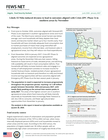
Angola Food Security Outlook June 2026 - January 2027: Likely El Niño-induced dryness to lead to outcomes aligned with Crisis (IPC Phase 3) in southern areas by November
Summary by Christgiving Editorial Desk Famine Early Warning System Network , ReliefWeb
· July 13, 2026
· 6 min read
. Key Messages From June to October 2026, outcomes aligned with Stressed (IPC Phase 2) are expected in southern agropastoral zones and much of the coast. The March-June national cereal harvest was below average, and rural households will likely deplete their food stocks and become market reliant up
Story provenance No corrections
Summary created by Christgiving Editorial Desk — automated, rule-governed Original reporting Famine Early Warning System Network, ReliefWeb Original story Read at the source Source published Jul 13, 2026 AI assistance Automated summary drawn from the source’s own published text Prepublication human review No — editorial rules, flagged-item review, and published samples
Every story comes with a passport. How we work · Corrections log
Key takeaway From November 2026 to January 2027, Crisis (IPC Phase 3)-aligned outcomes are expected across agropastoral areas.
Why this matters
The anticipated El Niño-induced dryness in Angola's southern areas threatens to exacerbate food insecurity, particularly among poor agropastoral households. With a below-average national cereal harvest, these households will deplete their food stocks earlier than usual, relying on market purchases and self-employment to access food. The decline in livestock-to-maize terms of trade and elevated prices will further erode their purchasing power, leading to food consumption deficits. The situation is especially dire for households without livestock, which will face severe food insecurity. The projected increase in the population in need, reaching 1.0-1.49 million people between November 2026 and January 2027, highlights the urgency of the situation. Faith-based organizations and humanitarian groups, including ECFA-accredited nonprofits, may need to ramp up their disaster relief efforts to support affected communities, particularly in southern agropastoral areas where food insecurity is expected to intensify.
About this story
Original reporting by ReliefWeb . Christgiving surfaces reporting from trusted publishers and adds local editorial context so readers can quickly understand what a story means for their community. We attribute every source, link to the original report, and follow a documented editorial standards policy. To understand how stories are selected and reviewed, read our about page .
For the complete original report, visit ReliefWeb . Have a tip or correction? Contact our newsroom .
Category: disaster Published: July 13, 2026 Source: ReliefWeb Reading time: 6 min
Get more Christgiving stories like this
Free weekly briefing covering disaster and other local news. Curated by our editorial team. No spam.
By subscribing you agree to our privacy policy . Unsubscribe anytime.
Frequently asked about this story
What is this story about? . Key Messages From June to October 2026, outcomes aligned with Stressed (IPC Phase 2) are expected in southern agropastoral zones and much of the coast. The March-June national cereal harvest was below average, and rural households will likely deplete their food stocks and become market reliant up
When was this published? This article was first published on July 13, 2026 by ReliefWeb and curated for Christgiving readers.
Who reported this story? This story was reported by Famine Early Warning System Network at ReliefWeb. To learn more about how Christgiving selects and reviews stories, see our editorial standards .
Where can I find related coverage? See more disaster coverage from Christgiving, or browse our daily briefing and topic hubs .






![Philippines: Mayon Volcano Summary of 24Hr Observation 21 July 2026 12:00 AM [EN/TL]](https://christgiving.com/imgp?u=https%3A%2F%2Freliefweb.int%2Fsites%2Fdefault%2Ffiles%2Fstyles%2Fthumbnail%2Fpublic%2Fpreviews%2F7b%2Fab%2F7babad7b-0004-4749-a251-aebe7cd64c4c.png)


![Kazakhstan: Қазақстан — халықаралық еңбек мигранттарымен жүргізілген сауалнама (8 кезең) [KZ]](https://christgiving.com/imgp?u=https%3A%2F%2Freliefweb.int%2Fsites%2Fdefault%2Ffiles%2Fstyles%2Fthumbnail%2Fpublic%2Fpreviews%2F81%2Fc9%2F81c9de96-63f8-5abd-a0f7-a9845cf354db.png)


![oPt: MSF calls for the immediate release of all Palestinian healthcare workers arbitrarily detained by Israel [EN/AR]](https://christgiving.com/imgp?u=https%3A%2F%2Freliefweb.int%2Fsites%2Fdefault%2Ffiles%2Fstyles%2Fthumbnail%2Fpublic%2Fpreviews%2F7a%2F83%2F7a83c3a2-a82a-4ed6-b855-de4f37ab5bda.png)


